
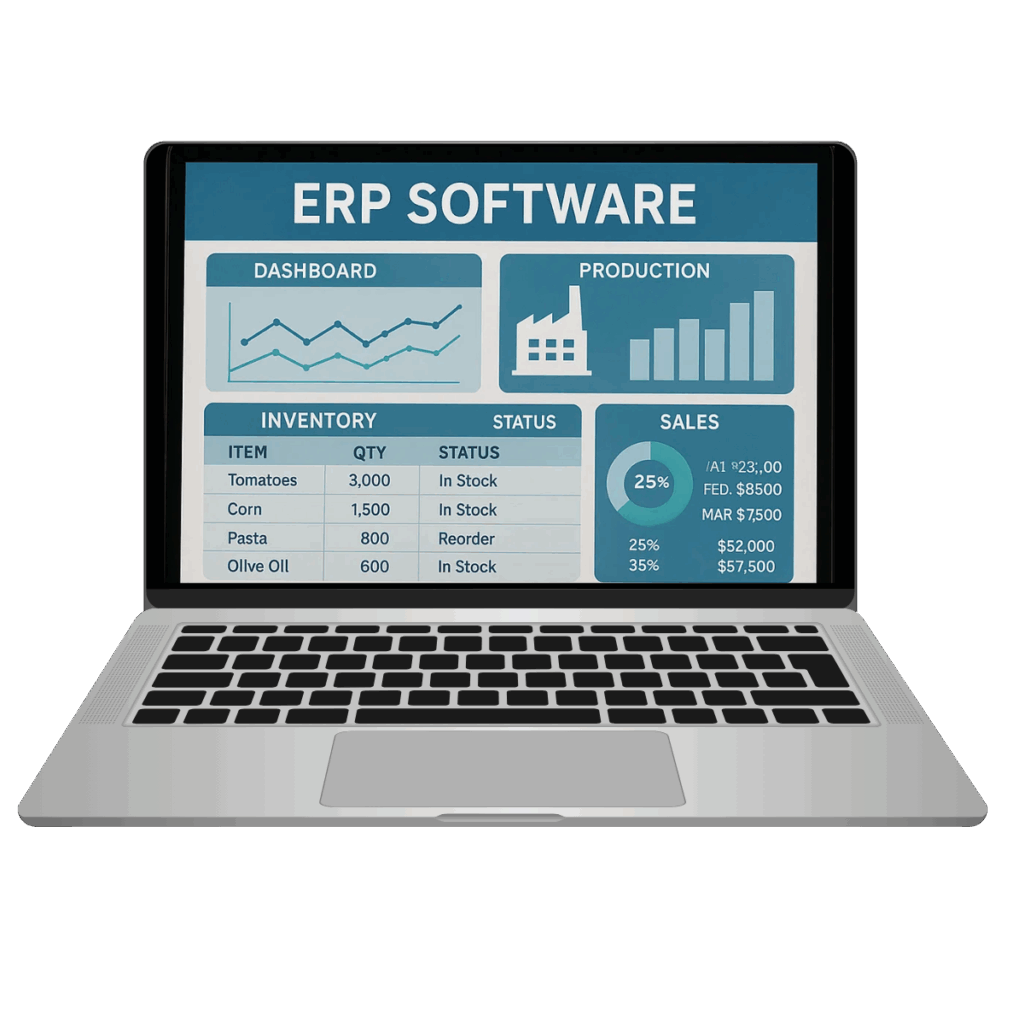
Enterprise Resource Planning (ERP) acts as a smart command center for food businesses like a digital operations maestro that coordinates everything from recipes to compliance. An effective food ERP:
Benefit | What It Means for Your Business |
1.Better Inventory Management | Stay on top of stock levels, avoid over-purchasing, and cut down on food waste. |
2. Full Product Traceability | Track every ingredient and batch from source to shelf for safety and recalls. |
3. Process Automation | Reduce manual work by automating routine tasks across departments. |
4. Smarter Planning & Costing | Get accurate batch-wise costing and forecast demand more precisely. |
5. Real-Time Data Visibility | Make faster, informed decisions using live dashboards and analytics. |
6. Improved Customer Experience | Ensure timely deliveries, accurate order fulfillment, and better service. |
7. Easier Compliance | Automatically document and track quality checks, audits, and regulatory needs. |
8. Scalable for Growth | Easily adapt the system as your operations expand to new markets or locations. |
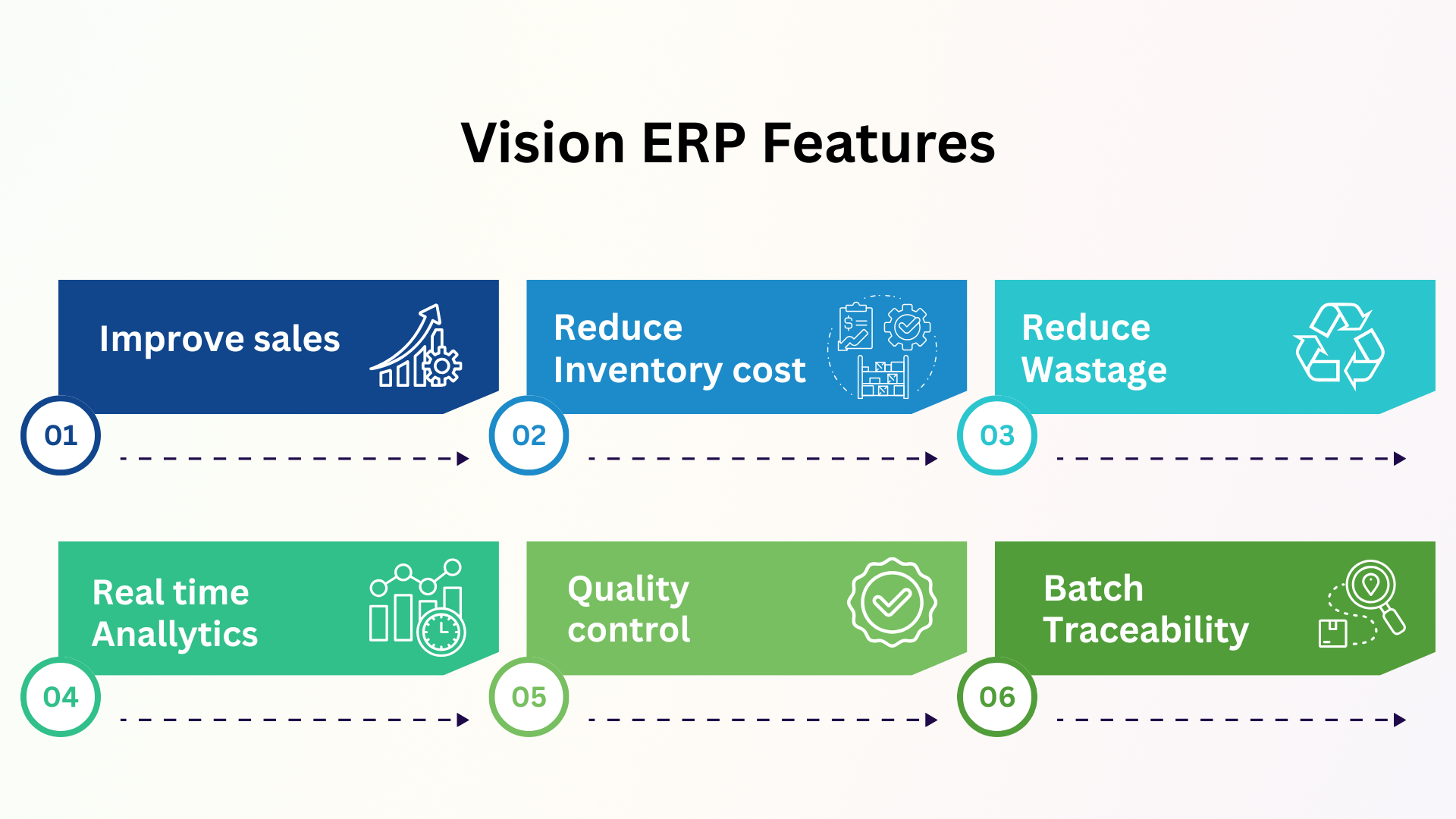
Cloud-based ERP offers flexibility, real-time access, and scalability - perfect for fast-moving industries like food and FMCG. It allows remote monitoring, multi-location management, and fast updates without needing heavy IT infrastructure, making it a cost-effective choice for growing businesses.
ERP in the food industry incorporates comprehensive quality control features, ensuring adherence to stringent quality standards throughout the production process, resulting in consistent and high-quality products.
ERP improves customer satisfaction by streamlining sales processes, optimizing order fulfillment, and providing personalized services to individual customer needs.